
Complete Guide for Civil Engineers and Construction Professionals
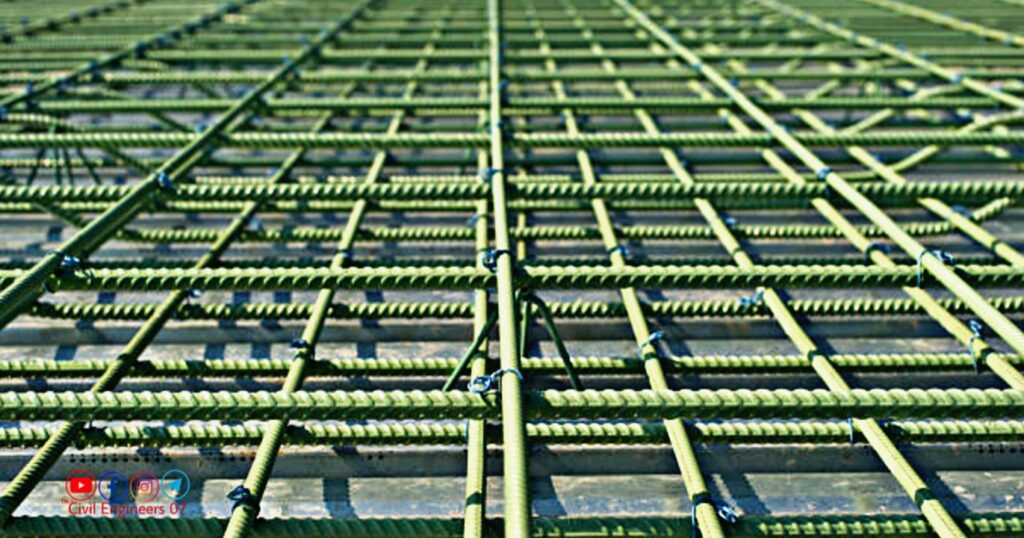
Reinforcement steel plays a very important role in reinforced concrete structures. It provides tensile strength to concrete and helps the structure resist loads safely. However, one of the biggest problems in reinforced concrete construction is corrosion of steel reinforcement.
To solve this problem, epoxy-coated reinforcement steel was introduced. In this article, we will understand what epoxy-coated reinforcement steel is, how it is made, its advantages, disadvantages, applications, and frequently asked questions.
What Is Epoxy-Coated Reinforcement Steel?
Epoxy-coated reinforcement steel, also known as epoxy-coated rebar, is a type of steel reinforcement bar that is coated with a protective layer of epoxy resin.
The epoxy coating acts as a protective barrier between the steel surface and external environmental elements such as:
Moisture
Oxygen
Chlorides (salt)
Chemicals
This protective layer significantly reduces the chances of corrosion, especially in aggressive environments like coastal areas and bridges exposed to de-icing salts.
Because of its green color coating, epoxy-coated rebar is often called “green rebar” in construction sites.
Why Is Epoxy Coating Required?
In normal reinforced concrete structures, steel is protected by the alkaline nature of concrete. However, over time, harmful substances like chlorides can penetrate the concrete and reach the steel.
When steel comes in contact with moisture and oxygen, corrosion begins. Rust formation causes:
Increase in steel volume
Cracking of concrete
Spalling of concrete cover
Reduction in structural strength
Decrease in service life
Epoxy coating helps prevent direct contact between steel and corrosive elements, thus increasing the durability of the structure.
How Is Epoxy-Coated Rebar Manufactured?
The manufacturing process generally includes the following steps:
- Surface Preparation
The steel bars are first cleaned properly using abrasive blasting. This removes:
Rust
Mill scale
Dust
Oil
The surface must be clean for proper bonding of epoxy coating.
- Heating the Steel
After cleaning, the bars are heated to a specific temperature.
- Epoxy Powder Application
A special epoxy powder is sprayed on the hot steel surface. Due to heat, the powder melts and forms a uniform coating over the steel bar.
- Cooling and Inspection
The coated bars are cooled and inspected for:
Coating thickness
Uniformity
Surface defects
Pinholes or damages
The final product is ready for use after quality checks.
Properties of Epoxy-Coated Reinforcement Steel
Corrosion-resistant surface
Good bond strength with concrete
Smooth and uniform coating
Flexible coating that does not crack easily
Typical coating thickness: around 175 to 300 microns
Advantages of Epoxy-Coated Rebar
- Corrosion Resistance
The main advantage is protection against corrosion. It is especially useful in marine and coastal environments.
- Increased Service Life
Structures built with epoxy-coated reinforcement have a longer lifespan compared to normal reinforcement.
- Cost-Effective for Long-Term Projects
Although initial cost is slightly higher than black steel bars, maintenance cost is much lower in the long run.
- Suitable for Aggressive Environments
It performs well in:
Bridges
Marine structures
Parking structures
High-humidity areas
Disadvantages of Epoxy-Coated Rebar
- Damage During Handling
If the coating is scratched or damaged during transportation or bending, corrosion can start from that damaged point.
- Higher Initial Cost
Epoxy-coated bars are more expensive than conventional reinforcement steel.
- Inspection Requirement
Extra care and inspection are required during installation to ensure coating integrity.
Applications of Epoxy-Coated Reinforcement Steel
Epoxy-coated rebar is commonly used in:
Highway bridges
Marine structures
Flyovers
Water treatment plants
Coastal buildings
Parking garages
Industrial structures exposed to chemicals
It is particularly recommended where the structure is exposed to chlorides and moisture.
Difference Between Normal Rebar and Epoxy-Coated Rebar
Feature Normal Rebar Epoxy-Coated Rebar
Corrosion Resistance Low High
Initial Cost Low Moderate
Maintenance Cost Higher Lower
Surface Bare steel Epoxy-coated
Service Life Moderate Longer
Precautions During Use
To ensure proper performance, follow these precautions:
Avoid damaging the coating during loading and unloading.
Use nylon slings instead of metal chains.
Repair damaged coating with approved epoxy repair material.
Store properly above ground and away from moisture.
Frequently Asked Questions (FAQs)
- What is the main purpose of epoxy coating on reinforcement steel?
The main purpose is to protect steel from corrosion by preventing contact with moisture and harmful chemicals.
- Is epoxy-coated rebar completely rust-proof?
It is highly corrosion-resistant but not completely rust-proof. If the coating is damaged, corrosion can occur at the exposed area.
- Is epoxy-coated steel stronger than normal steel?
The coating does not increase the strength of steel. It only improves corrosion resistance. Mechanical properties remain almost the same.
- Where should epoxy-coated reinforcement be used?
It should be used in structures exposed to moisture, salts, chemicals, and marine environments.
- Is epoxy-coated rebar expensive?
Yes, it is slightly more expensive than normal steel, but it reduces long-term maintenance costs.
- Can epoxy-coated bars be bent at site?
Yes, but bending must be done carefully to avoid cracking or damaging the coating.
Conclusion
Epoxy-coated reinforcement steel is an effective solution for protecting reinforced concrete structures from corrosion. It provides a protective barrier that increases durability and extends the service life of the structure.
Although it has a slightly higher initial cost and requires careful handling, its long-term benefits make it a smart choice for bridges, coastal buildings, and industrial structures.
For modern construction projects where durability and longevity are priorities, epoxy-coated reinforcement steel is a reliable and practical option.