
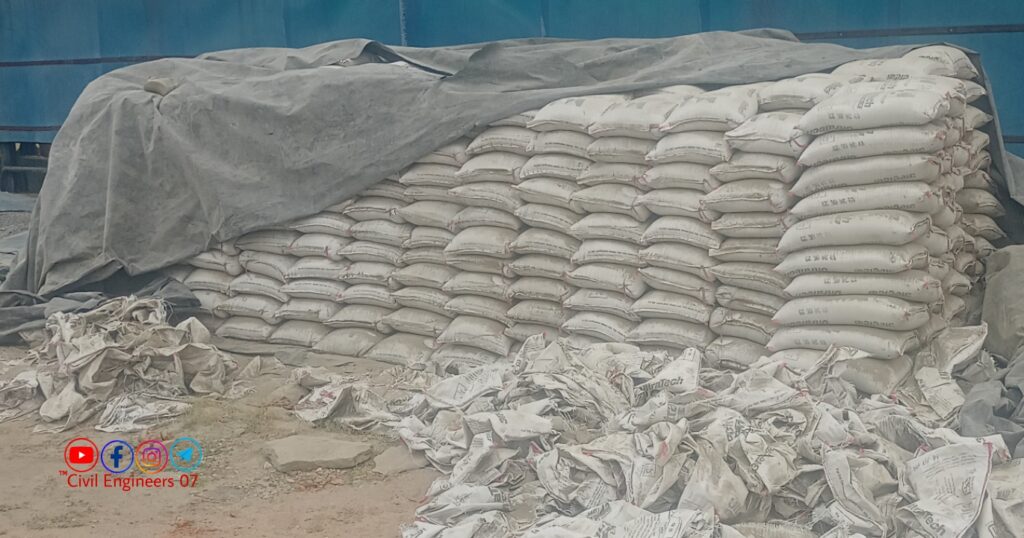
Cement is one of the most important materials in construction. The strength and durability of any structure depend greatly on the quality of cement used. However, even high-quality cement can lose its strength if it is not stored properly at the construction site.
Improper storage can lead to moisture absorption, lump formation, strength reduction, and financial loss. In this article, we will understand how to store cement correctly at a construction site, important precautions, common mistakes, and frequently asked questions.
Why Proper Cement Storage Is Important:
Cement is a hygroscopic material, which means it easily absorbs moisture from the air. When cement comes in contact with moisture:
It starts hydration before use
Lumps are formed
Setting properties change
Strength reduces
Workability decreases
Even small exposure to humidity can affect cement quality. Therefore, proper storage is essential to maintain performance and avoid wastage.
Basic Rules for Cement Storage at Site:
- Store Cement in a Dry Place:
The most important rule is to keep cement completely dry.
The storage room should be waterproof.
The roof should not leak.
Walls should be moisture-free.
No water should enter during rain.
Avoid storing cement in open areas.
- Use a Proper Cement Godown
A separate cement storage room (godown) should be constructed at the site.
Ideal Features of a Cement Store:
Raised floor
Damp-proof walls
Ventilation without direct moisture entry
Waterproof roof
Proper door arrangement
The floor level of the godown should be at least 150–200 mm above ground level to prevent water entry.
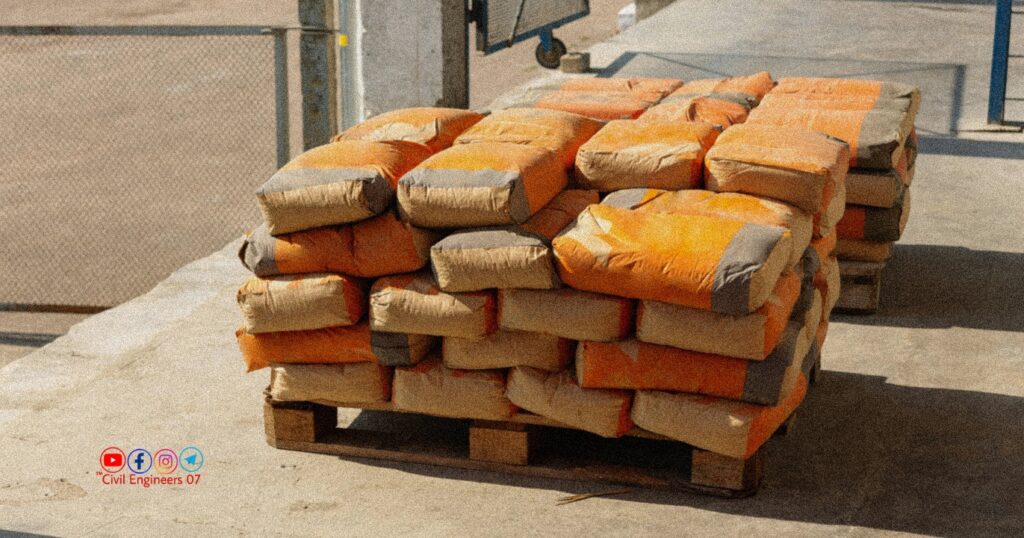
- Use Wooden Planks or Pallets
Cement bags should never be placed directly on the floor.
Use wooden planks or pallets.
Keep a minimum gap of 150 mm between floor and cement bags.
This prevents moisture absorption from the ground.
- Maintain Distance from Walls
Cement bags should not touch the walls directly.
Maintain at least 300 mm gap from walls.
This allows air circulation.
It prevents moisture transfer from walls.
- Proper Stacking of Cement Bags
Correct stacking is very important.
Stack bags in a horizontal position.
Do not stack more than 10 bags in height.
Height should not exceed 1.5 meters.
Use cross stacking method for stability.
Excessive height may cause bags to burst or collapse.
- Follow FIFO Method
FIFO means First In, First Out.
Always use older cement first and newly delivered cement later.
This helps prevent long-term storage and strength reduction.
- Protect from Rain and Sunlight
Even during unloading:
Do not expose cement bags to rain.
Cover with tarpaulin if necessary.
Avoid direct sunlight for long periods.
How Long Can Cement Be Stored?
Cement should ideally be used within:
1 month for best results
Maximum 3 months if properly stored
Strength reduction over time:
After 3 months → strength may reduce by about 10–20%
After 6 months → strength reduction can be significant
After 12 months → not recommended for structural work
Always check manufacturing date before use.
How to Check Cement Quality After Storage
If cement is stored for a long time, check:
No hard lumps
Smooth and fine texture
No earthy smell
Cool feeling when touched
Normal color (greenish grey)
If hard lumps are present that cannot be crushed by hand, do not use it for structural work.
Common Mistakes in Cement Storage
Many sites make simple but serious mistakes:
Storing cement in open space
Placing bags directly on floor
Over stacking
Ignoring manufacturing date
Allowing water leakage in godown
Mixing old and new cement without FIFO
These mistakes can reduce concrete strength and increase project cost.
Special Precautions During Monsoon
During rainy season:
Double cover cement stacks with plastic sheets
Regularly inspect godown roof
Ensure proper drainage around storage area
Avoid bulk storage if not required
Humidity is higher in monsoon, so extra care is needed.
Recommended Cement Storage Layout
A proper cement storage arrangement should include:
Elevated platform
Cross ventilation
Clear marking of batch and date
Separate stacking zones for different types of cement
Organized storage improves material control and reduces wastage.
Frequently Asked Questions (FAQs)
- Can cement be stored in open area?
No, cement should never be stored in open areas. It must be kept in a dry and covered room.
- How high can cement bags be stacked?
Maximum 10 bags in height or about 1.5 meters to avoid collapse and lump formation.
- What happens if cement absorbs moisture?
It starts early hydration, forms lumps, and loses strength, which affects concrete quality.
- Can lumpy cement be used?
If lumps are soft and break easily, it may still be usable. But if lumps are hard, it should not be used for structural work.
- How long is cement safe to use after manufacturing?
Best within 1 month. It can be used up to 3 months if stored properly, but strength gradually reduces over time.
Conclusion:
Proper cement storage at construction site is essential to maintain strength, durability, and quality of construction work. Cement must be protected from moisture, rain, and ground contact. A well-designed cement godown, correct stacking method, and FIFO system can significantly reduce material loss and improve project efficiency.
As a civil engineer or site supervisor, careful attention to cement storage can directly impact the strength and long-term performance of your structure.
Always remember:
Good storage means strong structure.